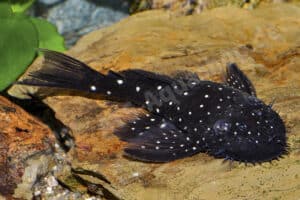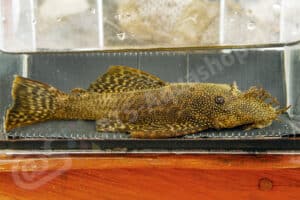

Ancistrus maculatus (Steindachner, 1881)
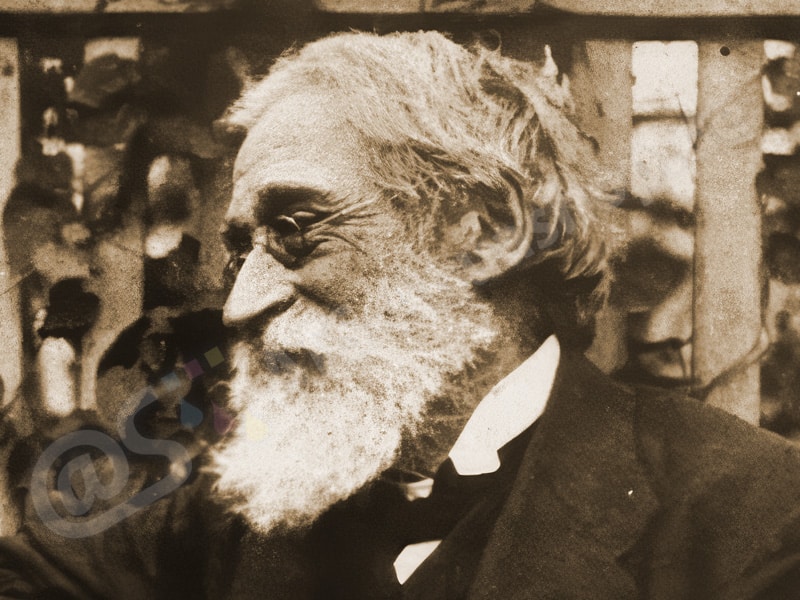
Photograph: public domain
Breeding
Keeping
Current
IUCN
Data Deficient (DD)
Size
(M) 13-14 cm / 5-6"
Aquarium size
ab 80 cm / from 3 ft
pH-Value
pH 6-8
Conductivity
< 450 µS/cm
Temperature
24-29 °C / 75-84 °F
Names and synonyms
Chaetostomus cirrhosus var. maculata
References
Steindachner (1881); Reis, Kullander & Ferraris (2003); Regan (1904); Isbrücker (1980)
Franz Steindachner described this mysterious species as Chaetostomus (Ancistrus) cirrhosus var. maculata, but very shortly. The type material on record comes from faraway places (Cudajas, Obidos, Rio Tajapoura, Rio Chagres), and consists of various species, according to Fisch-Muller in Reis et al. (2003). Unfortunately, Steindachner does not give a clear color description of the species. Five now largely uncolored syntypes from different regions in South America, which presumably represent different species, are a challenge that can hardly be solved by ichthyologists. This species will therefore probably always remain a phantom for us. The syntype NMW55035 from the Río Chagres in Panama is identical to Ancistrus chagresi regarding to Fisch-Muller, which is the only species known from the Chagres river system. Oddly enough, Regan (1904) also described a Chaetostomus maculatus, today counted among the genus Ancistrus, too. Of course, double names aren't permissible, and therefore Isbrücker (1980) named this species Chaetostoma greeni, which we list as Ancistrus greeni in this book.
Further information (such as origin, keeping, care and breeding) aboutAncistrus maculatus can be found in our new book about the loricariid catfish of the Ancistrus genus.
Bristlenose Catfishes: The Plecos of the Genus Ancistrus
640 pages about the armored catfish of the genus Ancistrus. With more than 140 species profiles, brilliant photos, and expert knowledge from Ingo Seidel & Andreas Tanke.
The New Definitive Guide to Ancistrus - get your Copy Today
Whether you’re a breeder, retailer, or enthusiast: This book offers everything about the keeping, breeding, and species diversity of the popular armored catfishes on over 500 pages. With detailed profiles, distribution maps, and fascinating pictures, it’s a must-have for every aquarist!