
Ancistrus macrophthalmus (Pellegrin, 1912)
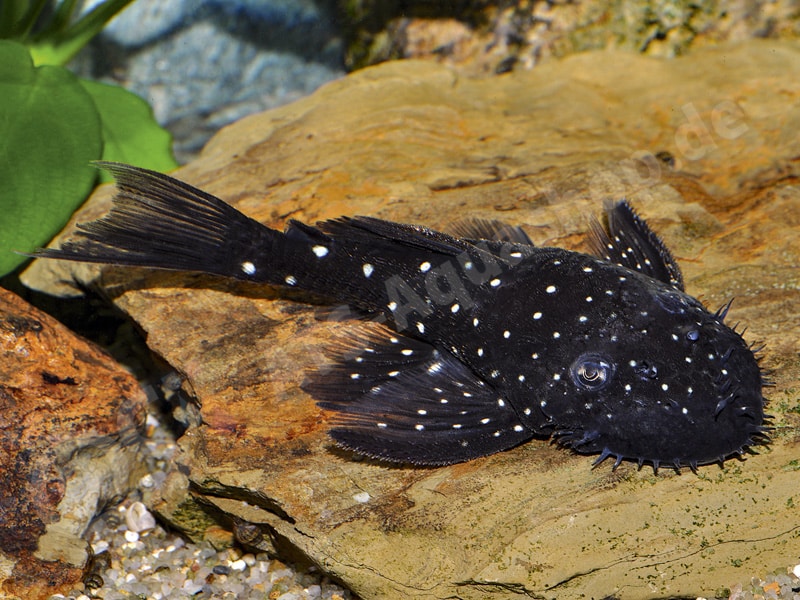
Photograph: Ingo Seidel
Breeding
Keeping
Current
IUCN
Least Concern (LC)
Size
(M) 10-12 cm / 4-5"
Aquarium size
ab 60 cm / from 2 ft
pH-Value
pH 5,5-7,5
Conductivity
< 450 µS/cm
Temperature
24-29 °C / 75-84 °F
Names and synonyms
Xenocara macrophthalmus, LDA 074, Large-Eyed Bristlenose Catfish
References
Pellegrin (1912); Venezuela ( )
With their strongly flattened and broad body shape, the white spots on a black background, combined with the huge eyes, this species is easy to identify. In nature, yellowish or partially yellowish specimens are regularly found, but they can change their color again. This phenomenon is also known from some Parancistrus species, and the cause for this has not yet been clarified. The white spots can vary or be completely absent.
Further information (such as origin, keeping, care and breeding) aboutAncistrus macrophthalmus can be found in our new book about the loricariid catfish of the Ancistrus genus.
Bristlenose Catfishes: The Plecos of the Genus Ancistrus
640 pages about the armored catfish of the genus Ancistrus. With more than 140 species profiles, brilliant photos, and expert knowledge from Ingo Seidel & Andreas Tanke.
The New Definitive Guide to Ancistrus - get your Copy Today
Whether you’re a breeder, retailer, or enthusiast: This book offers everything about the keeping, breeding, and species diversity of the popular armored catfishes on over 500 pages. With detailed profiles, distribution maps, and fascinating pictures, it’s a must-have for every aquarist!