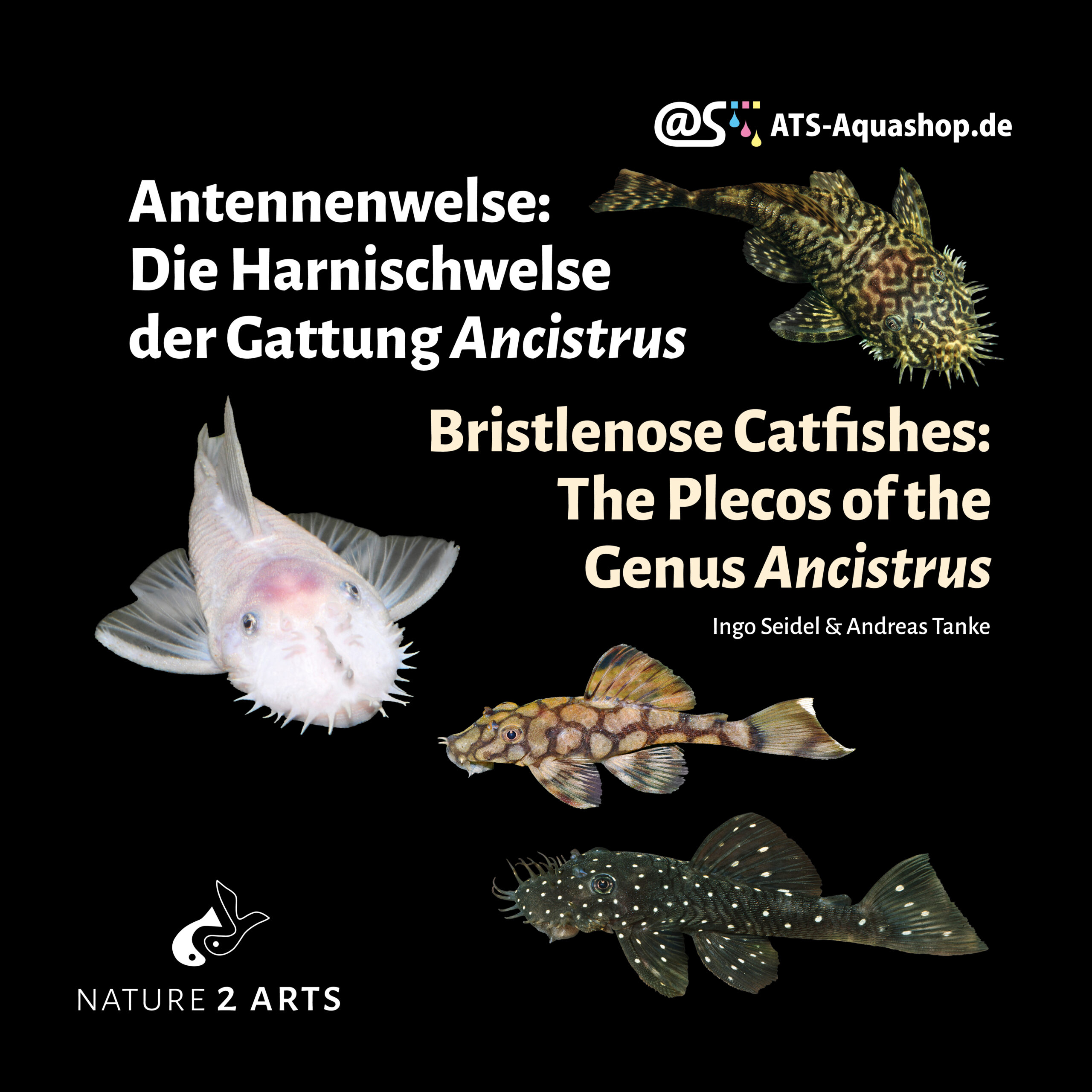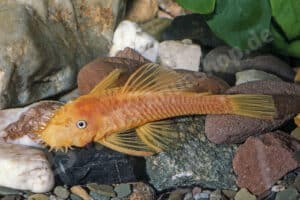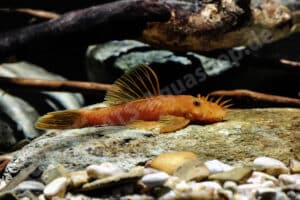

Ancistrus sp. “Albino”
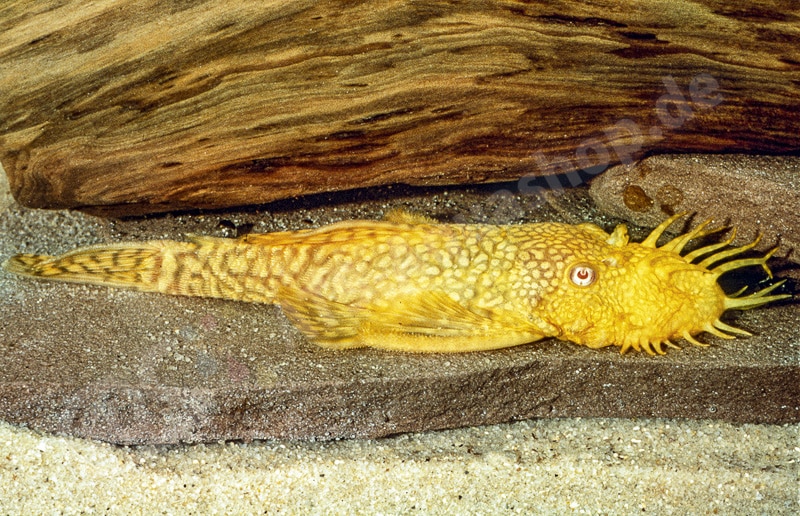
Photograph: Ingo Seidel
Breeding
Keeping
Current
IUCN
2
Size
(M) 12-15 cm / 5-6"
Aquarium size
ab 80 cm / from 3 ft
pH-Value
pH 6-8,5
Conductivity
< 900 µS/cm
Temperature
20-28 °C / 68-82 °F
Names and synonyms
Common Bristlenose Catfish, Brown Bristlenose Catfish, often mistakenly called Blue Bristlenose Catfish, A. dolichopterus or A. temminckii. However, this is based on a confusion with the real A. dolichopterus (L 183), which can show a bluish sheen.
In Europe, there are two variants of Ancistrus sp. "Albino": one variant is more of a solid yellowish color, while the other shows a light spotted pattern similar to the wild type. While the males develop a very large antler of long and partially branched tentacles, the females at best only have very short appendages on the edge of their snouts. Males also develop short, fleshy tentacles on the elongated pectoral fin spines.
Ancistrus sp. "albino" – a pale captive-bred form
"Albino" bristlenose refers to pale captive-bred forms within the Ancistrus "aquarium strain", typically showing light body colour and reddish eyes. This is a colour form rather than a separate species.
Breeding
Breeding follows the same core principles as the aquarium strain. Full guide:Bristlenose breeding (Ancistrus) – step by step.
Further information (such as origin, keeping, care and breeding) aboutAncistrus sp. "Albino" can be found in our new book about the loricariid catfish of the Ancistrus genus.
Antennenwelse: Die Harnischwelse der Gattung Ancistrus
640 Seiten über die Harnischwelse der Gattung Ancistrus. Mit mehr als 140 Artenporträts, brillanten Fotos und Expertenwissen von Ingo Seidel & Andreas Tanke.
Das neue Standardwerk über Ancistrus - sichere Dir noch heute Dein Exemplar
Ob Züchter, Händler oder Liebhaber: Dieses Buch bietet auf über 500 Seiten alles zur Haltung, Zucht und Artenvielfalt der beliebten Harnischwelse. Mit detaillierten Steckbriefen, Verbreitungskarten und faszinierenden Bildern ist es ein Muss für jeden Aquarianer!