

What are Ancistrus catfish?
Ancistrus catfish, mostly known in aquaristics by their genus name Ancistrus, are among the most popular armored catfish in freshwater aquariums. Many aquarists know them as diligent “window cleaners” or affectionately call them Scheibenknutscher, Scheibenlutscher or simply Knutschi. Behind these robust, peaceful catfish, however, there is much more than just a practical algae eater: Ancistrus catfish are a species-rich, exciting group of fish with diverse shapes, colors and origins in South America.
At Ancistrus.at, the focus is on the animals: from compact profiles of individual species and L-numbers to background articles on keeping, feeding, and breeding. This article provides a basic introduction to the question: What are Ancistrus catfish – and what makes them so special?
Do you want to breed them specifically?
Then start here: Breeding Ancistrus Catfish (Ancistrus) – Step-by-Step.
The following is also important for the right breeding group: Identifying the Sex.
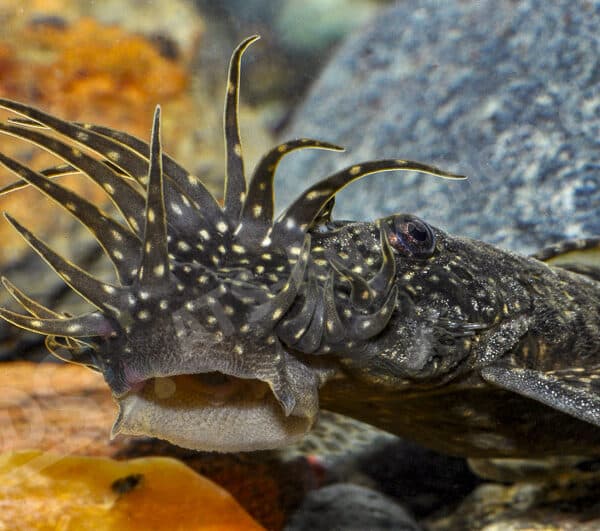
Common Ancistrus catfish with impressive tentacles, photo: Ingo Seidel
Ancistrus – a species-rich genus of armored catfish
Ancistrus catfish belong to the family of armored catfish (Loricariidae). Characteristic of this group are the bony armor plates instead of “normal” scales and the inferior sucker mouth, with which the animals scrape growth from roots, stones and other surfaces. The genus Ancistrus is widespread in large parts of South America and inhabits very different habitats – from clear, oxygen-rich streams to calmer river sections with roots, leaves and dead wood, and even in residual waters, ponds and puddles.
Most commercially available Ancistrus catfish remain relatively small at 8-12 cm standard length and are considered robust, peaceful catfish that are well suited for many community tanks. In addition to the “Common Ancistrus catfish” ( Ancistrus sp. “Aquarienstamm” ) there are a variety of other species and forms, some of which are referred to by L-numbers or trade names – such as Ancistrus sp. (L 111) or Ancistrus sp. (L 393) .
A filterable overview of described species, undescribed forms, and L-numbers can be found in the species list on Ancistrus.at. For more in-depth practical information on keeping and breeding, this page links to the guide “Ancistrus Catfish (Ancistrus) in the Aquarium: Keeping, Care & Breeding”.
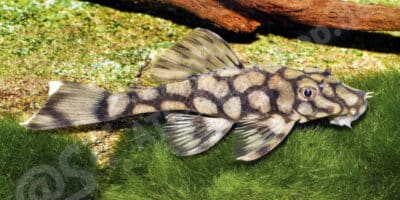
Ancistrus sp. (L519), photo: Ingo Seidel
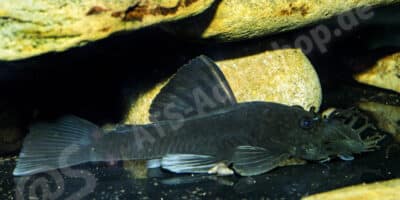
Ancistrus sp. (L508), photo: Andreas Tanke
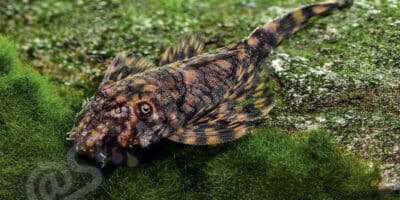
Ancistrus sp. “Rio Paraguay” (L529), photo: Ingo Seidel
Typical characteristics of Ancistrus catfish
Ancistrus catfish cannot be confused with other aquarium fish at first glance. Important features are:
- Stocky, slightly flattened body with bony plates (armor) that protects them from injury.
- Sucker mouth on the belly side, with which they scrape algae, growth and food tablets from surfaces.
- “Antennae” on the head: In adult males, the eponymous fleshy tentacles form on the head; in females, they are usually not or only weakly developed.
- Crepuscular and nocturnal lifestyle: During the day, Ancistrus often sit in caves, under roots or in dense vegetation.
The pronounced tentacles of the males in particular have given the Ancistrus catfish their name and make them real character fish in the aquarium. How to distinguish males and females in detail is explained in more detail in the blog article “How do I recognize the sex of my Ancistrus catfish?”.

Female of Ancistrus sp. “Aquarienstamm” / Common Ancistrus catfish, photo: Ingo Seidel

Male of Ancistrus sp. “Aquarienstamm” / Common Ancistrus catfish, photo: Ingo Seidel
Habitat and origin
In nature, Ancistrus catfish mainly inhabit waters in South America – such as tributaries of the Amazon, Orinoco or Paraná. Depending on the species, they live in clear, oxygen-rich streams with strong currents or in rather calm, weeded areas with roots and leaf accumulations. Common denominator: There are many hard surfaces with growth and hiding places.
This origin is reflected in the demands in the aquarium. Many Ancistrus species cope well with soft to medium-hard water, as long as the water quality is stable, clean and well filtered. Typical areas in which most species feel comfortable are:
- Temperature around 22-27 °C
- pH usually slightly acidic to neutral
- regular water changes
Details may vary depending on the species – this is exactly where the individual profiles on Ancistrus.at help, in which origin, water values and size are compiled for many Ancistrus forms.
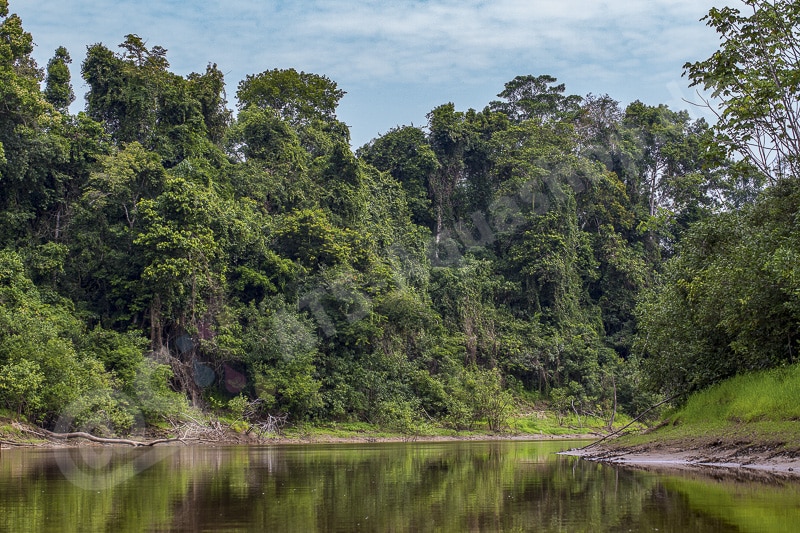
Biotope of Ancistrus alga “Rio Tapiche”, photo: Andreas Tanke
Ancistrus catfish in the aquarium: Keeping & setup
Even if Ancistrus catfish are often placed in the tank as a “cleaning crew”, they should primarily be regarded as fully-fledged aquarium inhabitants with their own requirements. A typical Ancistrus catfish aquarium offers:
- Sufficient floor space: A tank from 80 cm in length is usually useful for a pair or a small group, more space is always welcome.
- Structure and hiding places: branched roots, stone structures, clay tubes and special catfish caves. Ancistrus catfish males form territories and use caves for spawning.
- Shady zones: Floating plants or tall plants in the background provide dimmed light, which crepuscular catfish particularly like.
- Fine substrate: Sand or fine gravel reduce the risk of injury to barbels and abdomen.
For detailed practical tips on tank structure, water care, feeding, and socialization, it is worth taking a look at the detailed guide “Ancistrus Catfish (Ancistrus) in the Aquarium: Keeping, Care & Breeding”. Many aspects that are only touched upon here are discussed in more detail there.

A beautiful aquarium for Ancistrus catfish, photo: Ingo Seidel
Nutrition: More than just “window cleaners”
In the trade, Ancistrus catfish are often sold as “window cleaners” – and yes, they scrape algae from windows and decorations. Nevertheless, they are not machines that solve all algae problems free of charge and on the side. Anyone who considers Ancistrus only as window cleaners, Scheibenknutscher or Scheibenlutscher and does not feed them specifically risks malnutrition and frustration – for both catfish and owner.
A species-appropriate diet includes:
- herbal food tablets / catfish chips with a high fiber content
- Vegetables such as zucchini, cucumber, peppers, pumpkin, blanched spinach
- Leaves (beech, oak, sea almond tree) as an additional source of fiber and growth surface
- some animal food (e.g. Artemia, mosquito larvae) in moderation, depending on the species and stocking
Wooden roots are a must: Many Ancistrus catfish regularly rasp on real wood and thus absorb components that are important for their digestion. If there is a lack of growth and additional food, even “plant-safe” Ancistrus can start to rasp on delicate plant leaves – a topic that is discussed in detail in the blog article “Ancistrus and plants – why some catfish go to plants”.
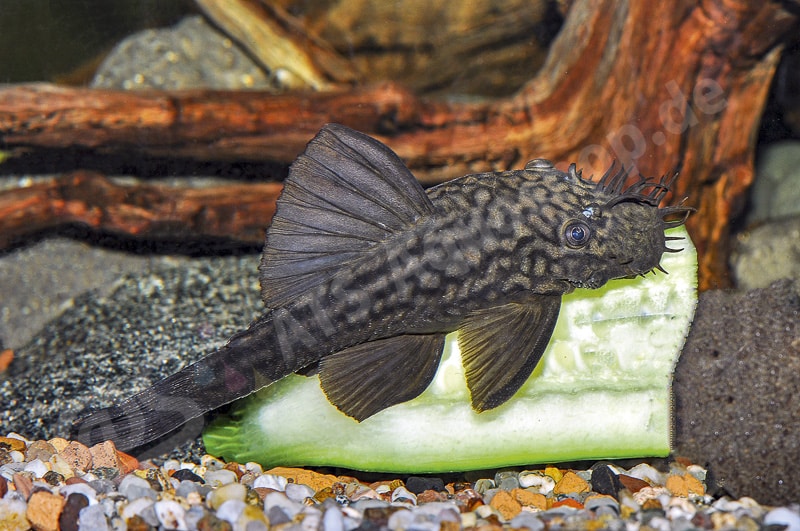
Male of Ancistrus yanesha on cucumber, photo: Ingo Seidel
Reproduction: productive cave breeders
Ancistrus catfish are typical cave breeders. A male looks for a suitable cave, cleans it thoroughly and lures a female into it to lay eggs. After fertilization, the male takes over the brood care, guards the clutch and fans the eggs with fresh water. The larvae initially remain in the cave and feed on the yolk sac before exploring the aquarium as young fish.
Under good conditions and with several caves available, a single pair of Ancistrus can spawn regularly – in community tanks, this can quickly lead to a “surplus of catfish.” If you want to breed them specifically, you will find a lot of practical advice in the care guide “Keeping, Caring & Breeding” and in the blog articles on the subject of “Breeding”, or directly in our breeding instructions: Breeding Bristlenose Catfish (Ancistrus) – Step-by-Step.

Brood-caring male of the albinotic breeding form of the common Ancistrus catfish, photo: Ingo Seidel

Ancistrus sp. “Aquarium strain,” juvenile fish, photo: Ingo Seidel
Why Ancistrus are more than just algae eaters
Ancistrus catfish are often purchased as “practical” aquarium inhabitants because they eat algae and growth. Anyone who deals with them more intensively quickly notices: The robust, peaceful catfish are exciting observation objects with pronounced behavior, individual characters and an amazing variety of species.
This is exactly the approach of Ancistrus.at: The website offers profiles of many Ancistrus species, background articles on keeping and feeding, and an Ancistrus blog with news and practical reports. If you want to delve even deeper, you will find the comprehensive standard work with over 600 pages, numerous species portraits, and many photos from nature in the book “Ancistrus: The Armored Catfish of the Genus Ancistrus“, which is available, among other places, in the ATS-Aquashop.
Frequently asked questions about Ancistrus catfish
How big do Ancistrus catfish get in the aquarium?
Most Ancistrus catfish of the genus Ancistrus, which are offered in the trade as robust, peaceful catfish, reach about 8–12 cm standard length in the aquarium. Some species remain somewhat smaller, others can become somewhat larger. In the species list on Ancistrus.at, the expected sizes are given for many Ancistrus species.
Are Ancistrus catfish really good "window cleaners"?
Ancistrus catfish are known as Scheibenknutscher and Scheibenlutscher because they scrape algae and growth from windows and decorations with their sucker mouth. They help with algae control, but cannot compensate for fundamental care errors. Ancistrus should not only be regarded as “window cleaners”, but as fully-fledged aquarium inhabitants with their own demands on food, setup and water quality.
Are Ancistrus catfish suitable for beginners?
Yes, many Ancistrus species are considered robust and peaceful and are therefore well suited for beginners – provided that the aquarium is sufficiently large, well filtered and offers hiding places and roots. Anyone who deals with keeping and nutritional requirements in advance has very grateful fosterlings with Ancistrus catfish. A good basis is provided by the profiles on Ancistrus.at and the book “Ancistrus Catfish: The Armored Catfish of the Genus Ancistrus”.
Do Ancistrus catfish attack aquarium plants?
In principle, Ancistrus catfish are considered plant-compatible. However, if they find too little plant food or growth, some animals may start to rasp on delicate plant leaves. This behavior occurs mainly in very clean tanks with little growth and a lack of additional feeding. More on this in the article “Ancistrus and plants – why some catfish go to plants”.
How many Ancistrus catfish can I keep in my aquarium?
For a typical community tank from 80 cm edge length, a pair or a small group of Ancistrus catfish is useful, provided that sufficient hiding places and caves are available. In tanks that are too small, territorial disputes can occur, especially between adult males. If you want to keep several Ancistrus species or variants specifically, you should choose correspondingly larger tanks and inform yourself about the final size and behavior in the species profiles.