
Bristlenose catfishes (Ancistrus) in the aquarium: keeping, care, and breeding
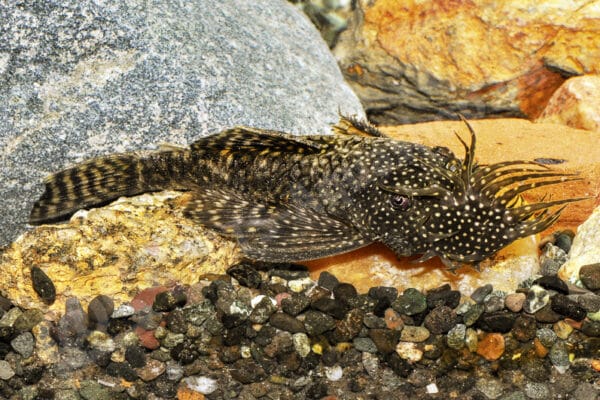
Ancistrus sp. “Aquarium strain,” male, photo: Ingo Seidel
Bristlenose catfishes of the genus Ancistrus are among the most popular armored catfish in aquatics. They are robust, relatively peaceful, and can be kept in many types of aquariums—from community tanks to specialized species tanks. At the same time, there is an astonishing variety of species and variants, from classic “brown Bristlenose catfishes” to rare L-numbers. You can find a complete list of known species here: Ancistrus Species List.
This page provides a concise overview of keeping, caring for, and breeding Ancistrus in aquariums. It is aimed at aquarists who already keep Bristlenose catfishes or who would like to learn more about the genus, and refers to further reading where the subject matter becomes more detailed.
How to breed Bristlenose Catfish (Ancistrus) – Step by Step
What are Bristlenose catfishes (genus Ancistrus)?
The genus Ancistrus belongs to the armored catfish family (Loricariidae) and is widespread in South America. Bristlenose catfishes inhabit a wide variety of habitats, from clear, oxygen-rich streams to larger rivers and slow-flowing waters with roots and dead wood.
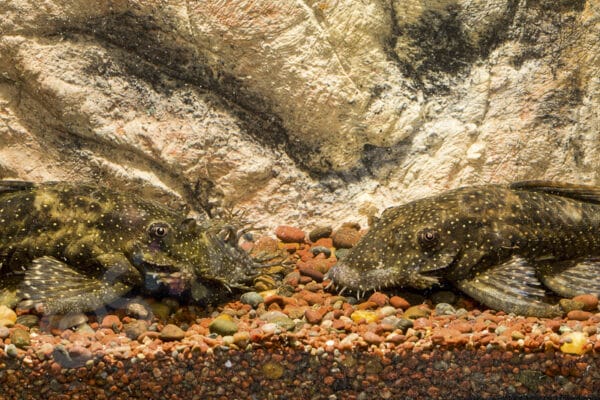
Ancistrus alga “Río Tapiche” (L 237), male (left) and female (right), photo: Andreas Tanke

Ancistrus sp. “Río Itenéz” (L 519), female, photo: Ingo Seidel
Typical characteristics:
- stocky, slightly flattened body
- bony plates instead of scales
- Suction mouth on the belly side
- In adult males, conspicuous “antennae” or tentacles on the head
Most Ancistrus available in stores remain relatively small (usually 8–12 cm in standard length) and are therefore also suitable for medium-sized aquariums, provided the keeping conditions are right.
Furnishings: Roots, caves, and hiding places
Bristlenose catfishes are crepuscular and nocturnal and appreciate plenty of cover:
- branched roots (mopane wood, mangrove roots, bogwood)
- Clay pipes and caves in various sizes
- Gaps in stone structures
- Layers of leaves (e.g., catappa, beech, or oak leaves)
Wood is not only used as hiding places, but is also actively gnawed on by many species. It thus contributes to the animals’ natural activity.
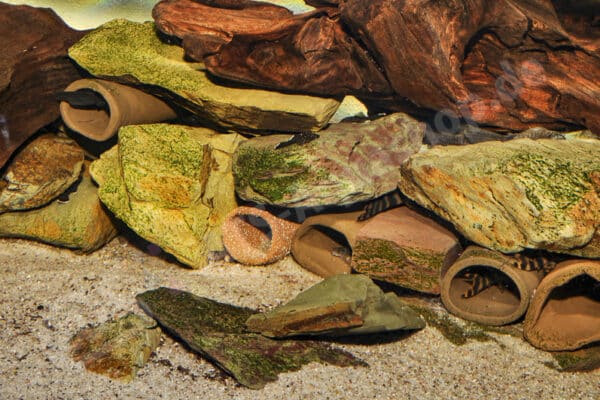
A typical aquarium for Bristlenose catfishes of the genus Ancistrus with plenty of hiding places, photo: Ingo Seidel
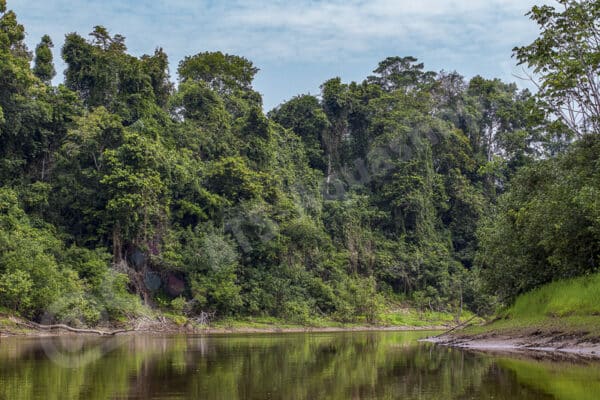
Habitat of Ancistrus alga in the Tapiche River in Peru, photo: Andreas Tanke
water values
The exact requirements vary depending on the area of origin and species. However, many antenna catfish tolerate a wide range as long as the water quality is stable and clean.
Typical areas:
- Temperature: approximately 22–28 °C
- pH value: usually in the slightly acidic to neutral range (approx. 6.0–7.5)
- Total hardness/carbonate hardness: often soft to moderately hard
More important than exact figures is good care practices with regular water changes, sufficient filter performance, and low nitrite and ammonium levels.
feeding
Bristlenose catfishes are not “window cleaners” that feed solely on algae deposits. Targeted supplementary feeding is crucial for their health, growth, and breeding.
Suitable feed:
- vegetable feed tablets and catfish chips
- Vegetables (e.g., zucchini, cucumber, bell pepper, pumpkin, blanched spinach)
- Leaves (beech, oak, catappa)
- Depending on the species and requirements, protein sources (e.g., frozen food, brine shrimp, mosquito larvae) in moderation
A varied, predominantly plant-based diet with occasional protein has proven successful for many Ancistrus. Excessive protein intake should be avoided to prevent digestive problems and water pollution.
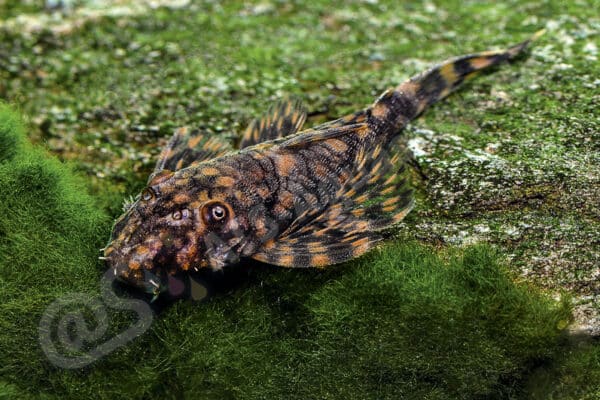
Ancistrus sp. “Rio Paraguay” (L 528), female, photo: Ingo Seidel

Apistogramma ortegai is well suited for socialization with plecos of the genus Ancistrus, photo: Andreas Tanke
Less suitable are:
- very aggressive or highly territorial fish
- Species that constantly burrow in the ground and disturb catfish
- large predators that could view Bristlenose catfishes as prey
Within the Ancistrus genus, territorial disputes can arise, especially among males, particularly if there are too few caves or too little space. Multiple males should only be kept in sufficiently large, well-structured aquariums with plenty of hiding places.
Socialization of Bristlenose catfishes
Bristlenose catfishes can be kept in many community tanks if a few points are taken into account:
Suitable tankmates:
- peaceful tetras, barbs, livebearers
- Small to medium-sized cichlids that are not too aggressive
- other ground-dwelling species, provided there is sufficient space and hiding places

Representatives of other pleco genera, such as Peckoltia sp. (L 295) shown here, can also be successfully kept together with Bristlenose catfishes (Ancistrus). Photo: Andreas Tanke
Breeding of Bristlenose Catfishes: The Plecos of the Genus Ancistrus
Breeding Ancistrus is considered easy in aquatics and is a major reason for their popularity. Nevertheless, it is worth taking a closer look at the details. We have created a detailed breeding guide for this purpose: Breeding Bristlenose Catfish (Ancistrus) – Step by Step
Preparation
- balanced diet for parent animals
- several suitable nesting cavities (clay pipes, wooden pipes, hollow spaces)
- Quiet areas in the aquarium, preferably without strong currents directly in front of the cave opening
A well-fed adult male with distinctive tentacles and one or more healthy females are the basis for successful breeding.
Further information on sexing Ancistrus can be found in our blog, and in the book:
How do I determine the sex of my Bristlenose Catfish?
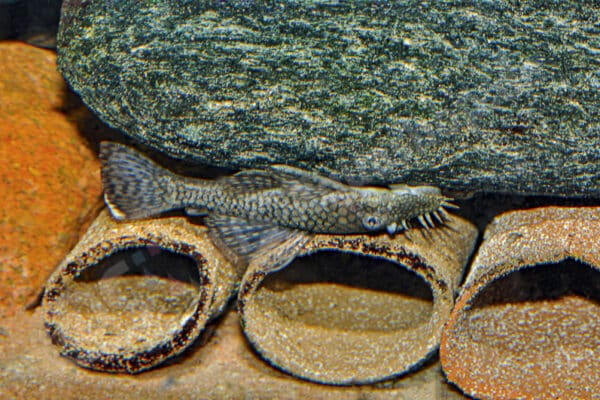
To breed Ancistrus, it is extremely important to provide sufficient caves, photo: Ingo Seidel
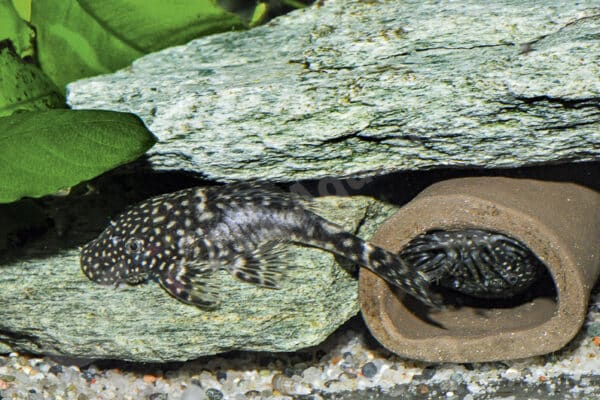
Ancistrus claro (LDA 008) during courtship, photo: Ingo Seidel
Courtship, egg laying, and brood care
As a rule, the male finds a cave and “guards” it. Females are lured to the vicinity of the cave. Eggs are laid inside the cave, after which the male takes over brood care:
- Guarding the eggs
- Fanning with the pectoral fins to supply oxygen
- Removing unfertilized or moldy eggs
Depending on the temperature, the larvae hatch after a few days. The male usually stays with the brood until the young fish leave the cave.
Rearing of young fish
Newly hatched fry initially feed on the yolk sac. Once this has been used up, suitable feed can be offered:
- fine dust feed for catfish
- finely crushed feed tablets
- blanched vegetables, cut into small pieces
- Biofilms and growth in aquariums
Cleanliness and good water quality are particularly important during rearing. Regular water changes with suitable water support the growth of young fish.

Ancistrus sp. “Aquarium strain,” juvenile fish, photo: Ingo Seidel
Here you will find a complete overview of known species and L-numbers in the Ancistrus Species List.
Frequently Asked Questions About Keeping Bristlenose Catfish
Important Note: The following answers refer to the widespread “common” Bristlenose Catfish, i.e., typical aquarium strains of Ancistrus sp. in a community aquarium. Many wild-caught or specialized species have significantly different requirements. For such animals, please always consult the respective species profiles and literature references.
How many "common" Bristlenose Catfish can I keep in my aquarium?
For typical aquarium strains of the “common” Bristlenose Catfish, a pair or a harem (1 male, 2–3 females) is usually sufficient in a standard tank with a length of about 80–100 cm or more. In smaller tanks, there should be fewer fish to ensure enough hiding places are available. Good structuring with caves, roots, and visual barriers is important so that the fish can avoid each other – otherwise, multiple males can get into territorial disputes. For other, specialized Ancistrus species, different recommendations apply depending on their size and behavior.
Do "common" Bristlenose Catfish eat plants or just algae?
Aquarium strains of the “common” Bristlenose Catfish are often sold as “algae eaters,” but are actually omnivores with a focus on plant-based food. They rasp biofilms, aufwuchs, and soft vegetable offerings (e.g., zucchini, cucumber, bell pepper), but also accept animal-based food like frozen food or catfish granules. Healthy, robust plants are usually left alone by them. If consistently too little plant-based food is offered or the fish are underfed, they may turn to delicate or weakened plants.
Which water parameters are suitable for the "common" Bristlenose Catfish?
The common aquarium strains of the “common” Bristlenose Catfish cope well with typical
community tank parameters: slightly acidic to neutral water (pH around 6.0–7.5), soft to medium-hard water, and temperatures between approx. 23 and 27 °C. More important than an exact value is good stability without strong fluctuations. For sensitive wild-caught specimens or species from very specific biotopes (e.g., extremely soft blackwater or cooler rivers), significantly different requirements sometimes apply – in such cases, the parameters should always be oriented towards their natural habitat.
Which caves are suitable for breeding the "common" Bristlenose Catfish?
The “common” Bristlenose Catfish is a cave breeder and prefers narrow, rear-closed
tubes. Clay or slate caves have proven effective, but self-made tubes from PVC or coconut shells are also accepted. The cave should be large enough for the male to just fit inside and “block” the entrance with its body. Several caves of different sizes increase the chance that a pair will find a suitable breeding cave. For other Ancistrus species, the shape and position of the caves – for example, more exposed to current or with different dimensions – may vary.
Can I cohabit "common" Bristlenose Catfish with shrimp and other bottom-dwelling fish?
How do I know if my "common" Bristlenose Catfish is getting enough food?
Well-fed aquarium strains of the “common” Bristlenose Catfish have a full but not bloated belly, a harmonious body shape, and appear active without being emaciated. If fish appear very thin, constantly search frantically for food, or increasingly nibble on wood decor and plants, you should increase the food supply and make it more varied. In a well-maintained aquarium with plenty of aufwuchs, wood, and supplementary vegetable and catfish food, overfeeding is rather rare – it is much more common for the fish to be underfed in the long term.
Do "common" Bristlenose Catfish get too big for a normal aquarium?
Typical aquarium strains of the “common” Bristlenose Catfish usually remain at about 8–12 cm total length. For a normal community aquarium with a length of approximately 80–100 cm or more, this is manageable if the tank is well-structured and offers enough hiding places.
However, these Ancistrus strains are unsuitable for very small tanks and nano aquariums – they need space, caves, and territories. Larger or specialized species of the genus Ancistrus can grow significantly larger and should only be kept in appropriately sized tanks.
Are "common" Bristlenose Catfish true "algae eaters"?
The “common” Bristlenose Catfish is often referred to as an “algae eater” in the trade, but it does not exclusively eat algae. It is an omnivore with a clear focus on plant-based food and aufwuchs: biofilms, coatings on roots and stones, soft vegetables, and special catfish food.
While algae coatings in the aquarium are utilized, they are not sufficient on their own. Anyone who uses Bristlenose Catfish solely as a “cleaning crew” and hardly provides supplementary feeding risks deficiency symptoms and damage to plants or decorations. A varied diet is always mandatory, even for aquarium strains – and even more so for sensitive wild-caught specimens and specialized species.
Learn more in the standard reference work on Ancistrus
This overview can only provide a glimpse into the fascinating world of Bristlenose catfishes. Anyone who would like to delve deeper—from systematic details about the diversity of species to practical experience reports and extensive photos—will find a comprehensive description of the genus in the book “Bristlenose Catfishes: The Plecos of the Genus Ancistrus”
Many species are represented on ancistrus.at with brief profiles and pictures. The book supplements this information with detailed descriptions, further reading references, and extensive background information on the biology and ecology of Bristlenose catfishes.