
Ancistrus sp. (LDA093)
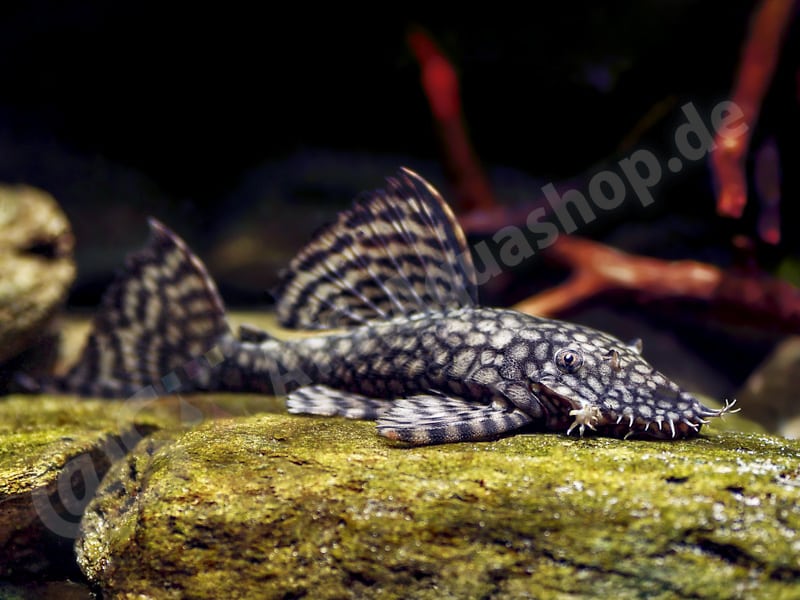
Photograph: Enrico Richter
Breeding
Keeping
Current
IUCN
Not Evaluated
Size
(ML) 15-18 cm / 6-7"
Aquarium size
ab 100 cm / from 3 ft
pH-Value
pH 6-8
Conductivity
< 450 µS/cm
Temperature
25-29 °C / 77-84 °F
Names and synonyms
Purus bristlenose catfish. Has erroneously been identified as L 089 (e.g. by Seidel & Evers, 2005).
References
Schraml, (2004); Schwabe (2005); Seidel & Evers (2005)
Sub-adult representatives of this relatively large species may show an attractive honeycomb pattern. Adult specimens have smaller, less flashy spots. A safe characteristic for identification is the black spot on the base of the dorsal fin on the membrane between the first and second ray, which is higher than in any other Ancistrus species with this characteristic. At second glance, the fins have narrow dark seams. The dorsal fin has up to five curved zig-zagging lines. The lower lobe of the caudal fin is enlongate and ends pointy. It has black bands,the fin seams disappear with age. The ventral side has a light-colored pattern. Males with strong tentacles, branching at the tips. Females stay smaller.
Further information (such as origin, keeping, care and breeding) aboutAncistrus sp. (LDA93) can be found in our new book about the loricariid catfish of the Ancistrus genus.
Bristlenose Catfishes: The Plecos of the Genus Ancistrus
640 pages about the armored catfish of the genus Ancistrus. With more than 140 species profiles, brilliant photos, and expert knowledge from Ingo Seidel & Andreas Tanke.
The New Definitive Guide to Ancistrus - get your Copy Today
Whether you’re a breeder, retailer, or enthusiast: This book offers everything about the keeping, breeding, and species diversity of the popular armored catfishes on over 500 pages. With detailed profiles, distribution maps, and fascinating pictures, it’s a must-have for every aquarist!