
Ancistrus marcapatae (L505)
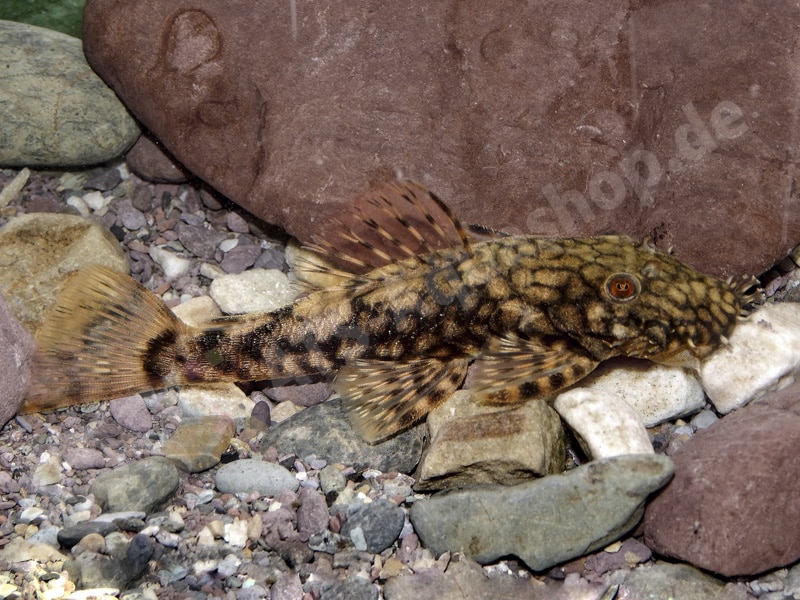
Photograph: Steven Grant
Breeding
Keeping
Current
IUCN
Endangered (EN)
Size
(SM) 8-10 cm / 3-4"
Aquarium size
ab 60 cm / from 2 ft
pH-Value
pH 7-8,5
Conductivity
< 900 µS/cm
Temperature
18-24 °C / 64-75 °F
Names and synonyms
Marcapata pleco, Chaetostomus marcapatae, Xenocara boliviana, Xenocara heterorhynchus
References
Evers, (2018);
This small species has adapted to its mountain habitats with a flat body and large sucker-mouth, showing the typical dentition of a limnivore. Its abdomen is mostly bare, however, bony plates rim it on the sides. Regan (1904) describes preserved specimens (which have lost all color by now) as olive, with dark spots in their fins, and describes an important trait: Their pectoral fins are short, and do not quite reach the basis of the anal fin when held flat to its side. Live specimens have peculiar red eyes, which Evers describes for L 505, too. Intensely colored dark brown borders between the light spots are also typical, which are strongly expressed in the lower back part of the body.
Further information (such as origin, keeping, care and breeding) aboutAncistrus marcapatae (L505) can be found in our new book about the loricariid catfish of the Ancistrus genus.
Bristlenose Catfishes: The Plecos of the Genus Ancistrus
640 pages about the armored catfish of the genus Ancistrus. With more than 140 species profiles, brilliant photos, and expert knowledge from Ingo Seidel & Andreas Tanke.
The New Definitive Guide to Ancistrus - get your Copy Today
Whether you’re a breeder, retailer, or enthusiast: This book offers everything about the keeping, breeding, and species diversity of the popular armored catfishes on over 500 pages. With detailed profiles, distribution maps, and fascinating pictures, it’s a must-have for every aquarist!