
Ancistrus fulvus (L338) (Holly, 1929)
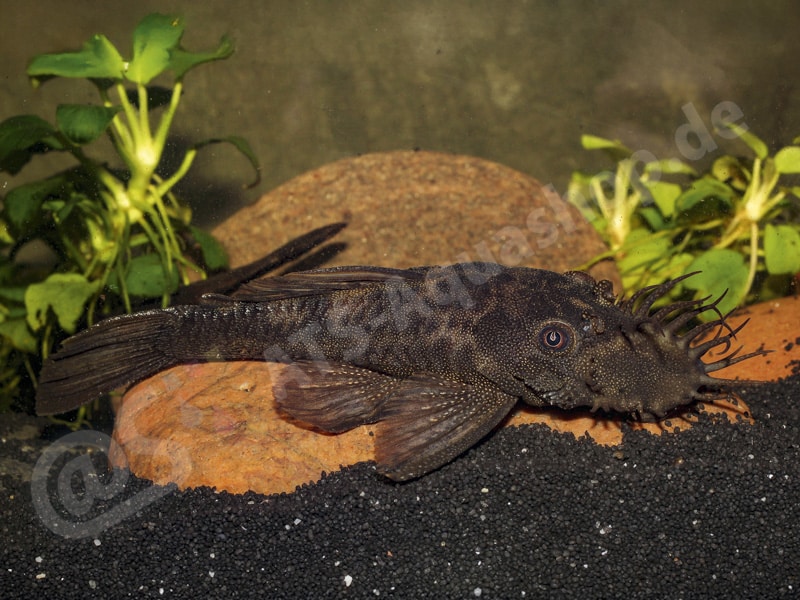
Photograph: Karl Schwamm
Breeding
Keeping
Current
IUCN
Data Deficient (DD)
Size
(M) 14-15 cm / 6"
Aquarium size
ab 100 cm / from 3 ft
pH-Value
pH 5,5-7,5
Conductivity
< 450 µS/cm
Temperature
25-29 °C / 77-84 °F
Names and synonyms
Xenocara fulva, Caramel bristlenose catfish, Guamá bristlenose catfish
References
Holly (1929); Werner, (2003);
Holly describes the color very shortly as "dark brown", but names another trait important for identification: The holotype has eight soft rays in its dorsal fin, quite extraordinary for this genus, which made a safe identification of L 338 as A. fulvus possible at all. Our heartfelt thanks go out to Darren Beddows for reviewing and sending photographic proof. In live coloration, the caramel-colored body has cloudy lighter parts, depending on the mood of the fish. It is strewn with inconspicuous tiny yellow dots, especially around the onset of the pectoral and ventral fins and around the snout rim. The caudal fin is reddish brown, with a white margin. Males have robust tentacles. Not all A. fulvus have eight branching rays in their dorsal fin, seven are also a possibility.
Further information (such as origin, keeping, care and breeding) aboutAncistrus fulvus (L338) can be found in our new book about the loricariid catfish of the Ancistrus genus.
Bristlenose Catfishes: The Plecos of the Genus Ancistrus
640 pages about the armored catfish of the genus Ancistrus. With more than 140 species profiles, brilliant photos, and expert knowledge from Ingo Seidel & Andreas Tanke.
The New Definitive Guide to Ancistrus - get your Copy Today
Whether you’re a breeder, retailer, or enthusiast: This book offers everything about the keeping, breeding, and species diversity of the popular armored catfishes on over 500 pages. With detailed profiles, distribution maps, and fascinating pictures, it’s a must-have for every aquarist!