
Bristlenose catfish of the genus Ancistrus are considered ideal stocking fish for planted community aquariums: they rasp algae and biofilms from roots, stones, and panes and are often described as “plant-safe.” Nevertheless, some aquarists report that their Ancistrus eat holes in leaves or “peel off” entire plants. How does that fit together?
This article is about how Ancistrus normally eat, why individual animals or situations can still lead to visible plant damage, and what can be done to permanently harmonize bristlenose catfish and aquarium plants.
How do Ancistrus eat in nature?
Ancistrus belong to the armored catfish, whose mouths have been transformed into a suction and scraping device. In their natural habitats, they rasp growth from stones, roots, and other surfaces: algae, biofilms, fine plant particles, and detritus form the main component of their diet. Small invertebrates are also ingested, but usually play a subordinate role.
In the aquarium, this behavior is demonstrated by the typical “rasping” of surfaces. Ancistrus move over roots, stones, and panes, let their mouths work in circles, and remove deposits in the process. This is an important difference from the targeted eating of healthy plant leaves: normally, they use these more as a surface on which growth grows, and not as a primary food source.
Why do some Bristlenose Catfish go for Plants?
Nevertheless, it cannot be denied that some keepers observe clear feeding marks on Echinodorus, Anubias, or other plants when Ancistrus live in the tank. There are several possible causes for this, some of which overlap:
1. Malnutrition and unbalanced feeding
The most common reason is a diet that is too sparse or one-sided. If bristlenose catfish live in a very clean, algae-poor aquarium and receive hardly any additional plant food, they often have no choice but to resort to other food sources. Tender, large-leaved plants are then more readily accepted as “emergency food.”
Anyone who uses their Ancistrus only “for the algae” and believes that additional feeding is not necessary risks exactly this behavior. A well-fed bristlenose catfish with regularly offered vegetable slices (cucumber, zucchini, bell pepper, pumpkin), plant-based wafers, and growth surfaces has significantly less reason to touch healthy plant leaves.
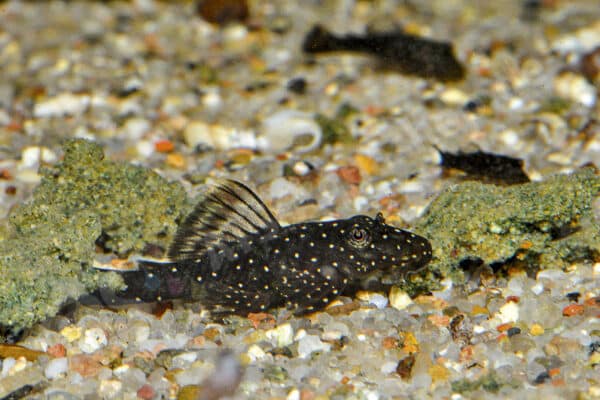
Gel food is also eaten by young Ancistrus sp. (L 486), photo: Ingo Seidel
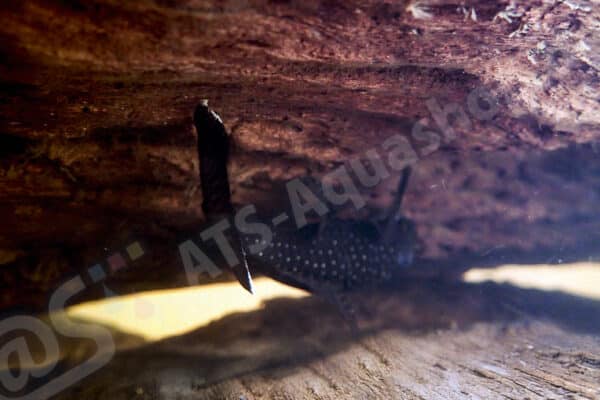
Ancistrus sp. “Rio Curua-Una” (L 485), L 289 in the habitat on deadwood, photo: Andreas Tanke
2. Too little growth and too many catfish
In newly set up or very cleanly kept aquariums, there is naturally little growth. If several Ancistrus are then used at the same time, the competition for the existing natural food is correspondingly high. The animals search every surface more intensively and are more likely to try out alternative food sources – including plant leaves.
The larger the group of bristlenose catfish in relation to the tank size and the amount of decoration, the more likely it is that visible “rasping” of plants will occur. Here, it helps to critically examine the stocking density and, if necessary, reduce the number of catfish or specifically introduce growth surfaces and roots.
3. Soft plant species with sensitive leaf structure
Not all plants react equally sensitively to rasping mouth movements. Especially with large-leaved, soft-leaved species such as some Echinodorus or Nymphoides varieties, it is clearly visible when an Ancistrus has run over them with its rough mouth plate: the epidermis is rubbed off, leaves appear “translucent” or get holes.
Hard-leaved plants such as many Cryptocorynes, some Anubias species, or more robust stem plants tolerate the rasping of growth much better without functions or appearance suffering greatly. Anyone who knows that large Ancistrus live in the tank should adjust the plant selection accordingly and rather avoid sensitive species with soft leaves.

Hole feeding of specialized aufwuchs feeders on Anubias
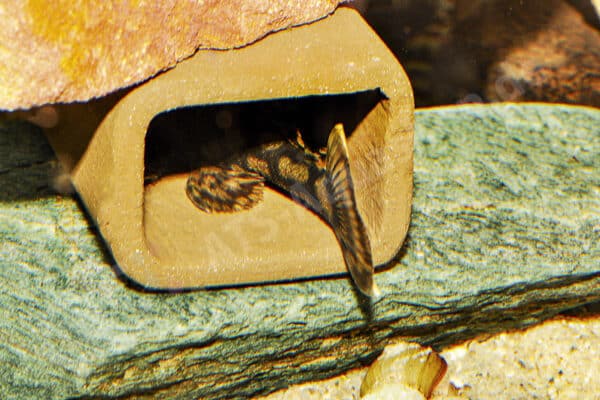
Brood-caring male of Ancistrus sp. (L 519), photo: Ingo Seidel
4. Individual preferences of individual animals
As with many fish species, there are also Ancistrus individuals who show certain behaviors more strongly than others. Some animals develop a preference for rasping certain plants, while conspecifics in the same tank completely ignore them. In such cases, it often only helps to relocate the animal in question or replace the affected plants.
What can be done about plant damage?
Anyone who wants to prevent Ancistrus from going for plants should turn several adjusting screws at the same time:
- Offer sufficient plant-based food: Several times a week vegetables (e.g. zucchini, cucumber, bell pepper, pumpkin, spinach), supplemented by high-quality green food tablets or spirulina wafers.
- Create enough growth surfaces: Roots, stones, and structured decoration offer surfaces for algae and biofilm growth on which Ancistrus are busy.
- Check stocking density: One or two bristlenose catfish in a medium-sized tank are usually unproblematic, while large groups can be too much of a good thing in densely planted tanks.
- Adjust plant selection: Choose more robust, harder plants, test sensitive species only carefully and replace them with more resistant alternatives if necessary.
- Vary feeding time and location: Offer food as close to the bottom as possible and at dusk, when Ancistrus become active – this ensures that the food is actually used by the catfish and not completely intercepted by other fish.
Ancistrus and plants – a question of balance
Basically, Ancistrus are excellently suited for planted aquariums. Many tanks run smoothly with bristlenose catfish for years without any significant plant damage occurring. Problems usually arise when nutrition, stocking density, and plant selection do not match or when individual animals develop special preferences.
Anyone who understands the natural feeding behavior of Ancistrus and takes the needs of the animals seriously can significantly minimize the risk. Conscious feeding, sufficient growth, and the choice of robust plants are the most important building blocks.
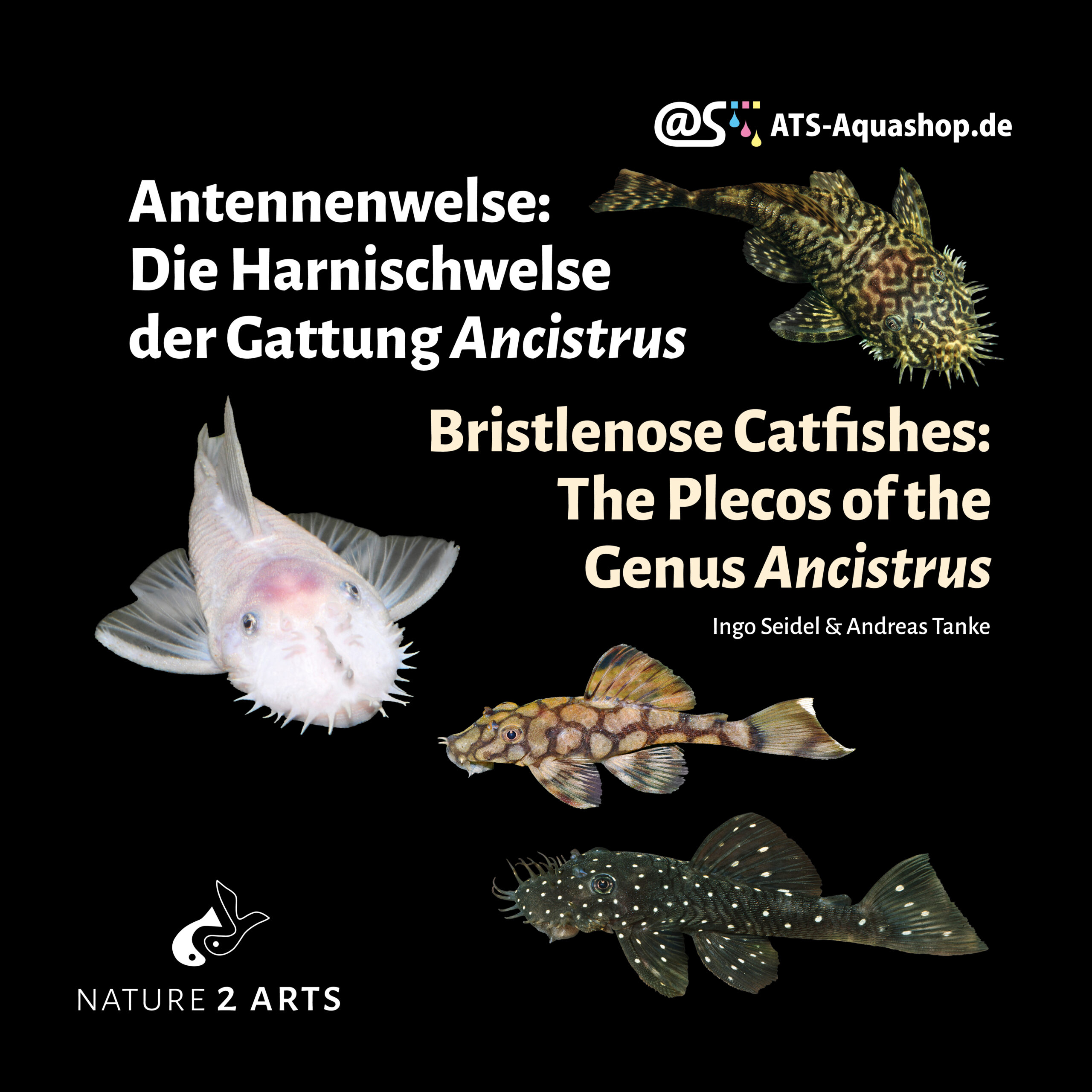
In-depth information on nutritional biology, various Ancistrus species and their requirements, as well as suitable habitats in the aquarium and in nature, can be found in the book “Antennenwelse: The Armored Catfish of the Genus Ancistrus”. It perfectly complements the practical reports and guide texts on Ancistrus.at and is available, among other places, in the ATS-Aquashop.
If you would like to delve deeper into the basics, take a look at our article on keeping Ancistrus catfish in the aquarium. You can find an overview of described and undescribed forms in the Ancistrus species list.
All Ancistrus Species at a Glance
In the article, you could learn how to distinguish between males and females. If you want to delve even deeper into the world of bristlenose catfish, it is worth taking a look at the standard work “Bristlenose Catfishes: The Plecos of the Genus Ancistrus”.
There, described species, L-numbers, and variants are presented in detail.