
This post is about five common mistakes when keeping Ancistrus in a community tank – and how to avoid them, so that bristlenose catfish can truly live healthy and species-appropriate lives in the long term.
1. Tank too small and insufficient structure
Many aquarists place Ancistrus as a “cleanup crew” into the next best aquarium without considering their eventual size and territorial behavior. Even if bristlenose catfish remain small compared to large “Plecos,” they still require sufficient floor space, hiding places, and retreat options.
Adult Ancistrus males can be quite territorial and claim preferred caves or root areas for themselves. In aquariums that are too small and lack sufficient hiding places, constant skirmishes can occur, recognizable by torn fins, stress coloration, and feeding marks on the odontodes. A tank of about 80-100 cm in length with several well-distributed caves, roots, and rock structures is significantly better suited for harmonious coexistence.
Structure in the tank is important not only for territorial behavior but also for the natural behavior of Ancistrus: They graze on biofilm from roots and stones, rest under overhangs, and seek out shady areas. A crystal-clear, “sterile” aquarium without decoration is unsuitable for bristlenose catfish.
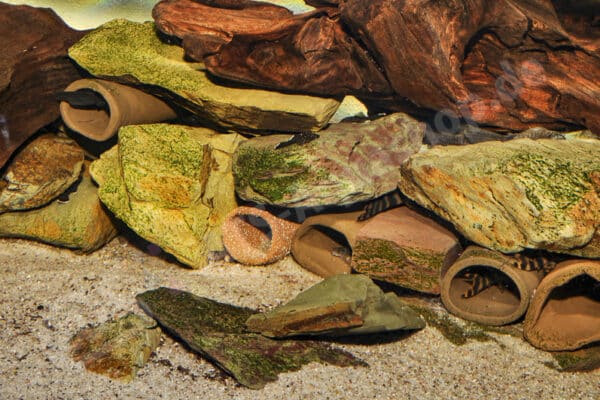
An aquarium for armored catfish should be well-structured and equipped with many hiding places, Photo: Ingo Seidel
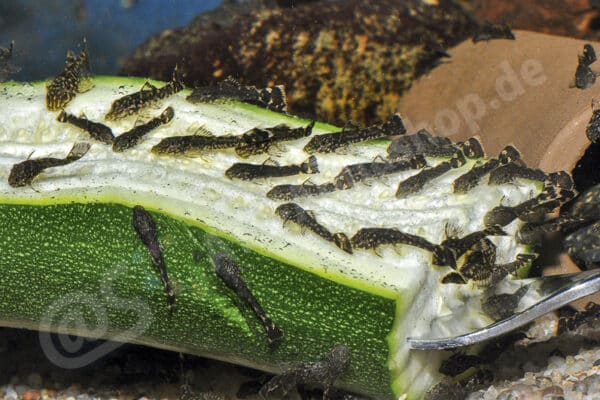
Ancistrus sp. “Aquarium strain” also eat zucchini, Photo: Ingo Seidel
2. The “Cleanup Crew” myth and incorrect feeding
One of the biggest misconceptions is the assumption that Ancistrus feed exclusively on algae and do not need additional food. While bristlenose catfish do eat algae and biofilms, this is rarely sufficient in densely planted or newly set up tanks. In nature, their diet consists of biofilm, detritus, and plant matter, sometimes supplemented by small invertebrates.
Those who keep bristlenose catfish in a community tank should specifically offer them plant-based food: sinking green food tablets, spirulina wafers, and vegetables such as cucumber, zucchini, bell pepper, or pumpkin. Additionally, protein-rich food (e.g., brine shrimp, fine frozen food) can be offered occasionally, without permanently “fattening” the animals.
An unbalanced, insufficient diet leads to Ancistrus becoming emaciated, increasingly grazing on delicate plants, or intensifying their search for food at night and bothering other fish. Therefore, feeding errors are often the real cause when bristlenose catfish suddenly “cause problems.”
3. Too many males and insufficient caves
Ancistrus are cave spawners, and adult males vigorously defend their chosen caves. Therefore, in small community tanks, only one male or a harmonious pair should be kept. Multiple males usually only work in very well-structured, large tanks with many hiding places.
Those who consciously keep Ancistrus should always plan for sufficient caves: tubes, coconut shells, clay caves, or undercut roots are well-suited. It is important to have both smaller hiding places for juveniles and larger caves for adult males. A common mistake is to simply “let the catfish run along” without providing a single suitable cave – this contradicts their natural behavior.
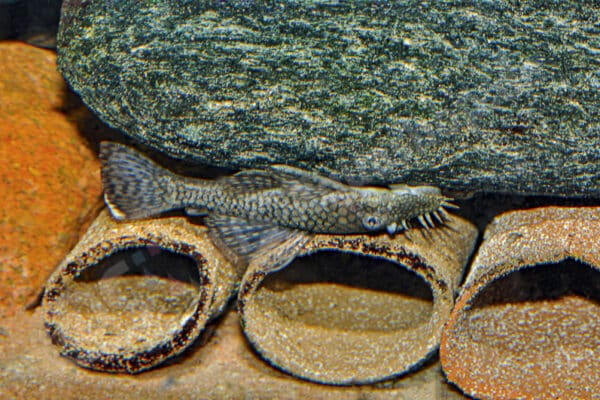
Male Ancistrus need many hiding places, Photo: Ingo Seidel

Apistogramma ortegai, male, Photo: Andreas Tanke
4. Incompatible Tank Mates and Unsuitable Water Parameters
Ancistrus are considered tolerant of various water parameters and are well-suited for many typical community tank fish. Nevertheless, there are limits: very hard, extremely alkaline, or persistently heavily polluted aquariums also stress robust bristlenose catfish. Long-term proven conditions include temperatures around 23-27 °C, a pH value in the slightly acidic to neutral range, and moderate general hardness. However, there are also highly specialized species that originate primarily from very low-germ blackwater or from higher mountain regions. Therefore, one should thoroughly inquire about the requirements of the respective species.
Tankmates that prey on the catfish or displace them from food are particularly problematic. Very large cichlids, predatory catfish, or highly territorial bottom-dwelling fish are not a good combination with Ancistrus. Many bristlenose catfish also do not feel comfortable in the long run in “discus tanks” with extremely warm water and very little structure; however, dwarf cichlids of the genus Apistogramma are excellently suited for cohabitation.
5. Unplanned reproduction and overpopulation of offspring
Another common mistake is underestimating the reproductive enthusiasm of Ancistrus. If suitable caves are available and the fish are well-fed, it is not uncommon for regular clutches of several dozen eggs to occur. The male takes over brood care, guarding the cave and fanning the eggs.
In a small community tank, such reproduction can quickly lead to an oversupply of juveniles. Even if other fish decimate some of the fry, often enough young catfish remain to overpopulate the tank. This is especially true for the widespread form Ancistrus sp. “Aquarium strain” is a very good example of this. In this case, caves are often not even necessary for reproduction.

Ancistrus sp. “Aquarium strain”, male in glass as a cave, Photo: Ingo Seidel
Conclusion: Consciously Keeping Ancistrus in a Community Tank
Bristlenose catfish are great aquarium inhabitants if their needs are taken seriously: sufficient space, structure, and caves, a balanced diet, suitable tankmates, and a thoughtful approach to reproduction. Then Ancistrus will not become a “problem fish” but will enrich the community tank with their interesting behavior and their usefulness as biofilm grazers.
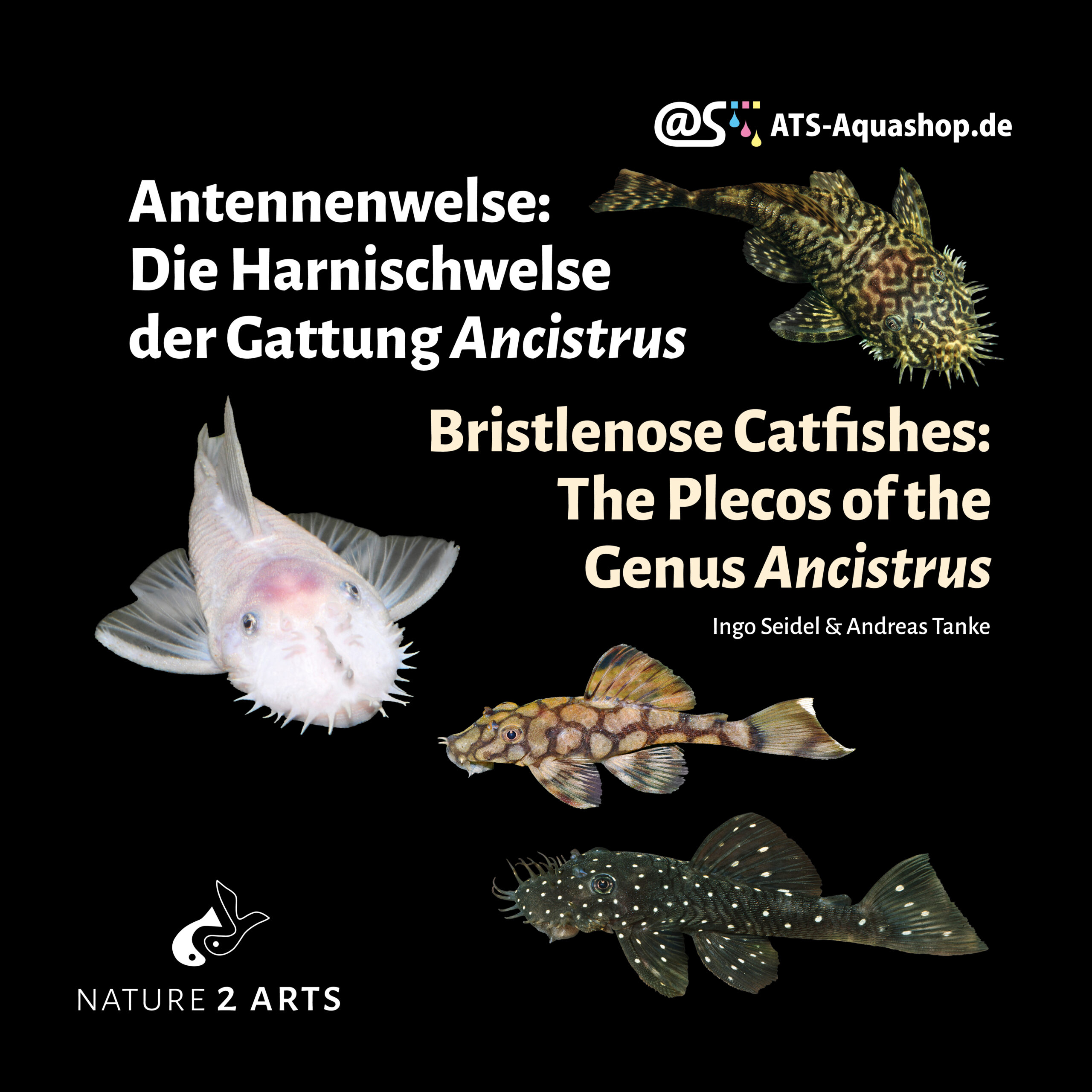
For those who want to delve deeper into the world of Ancistrus catfish, the bilingual standard work “Antennenwelse: The Armored Catfish of the Genus Ancistrus” provides detailed information on keeping, biology, biodiversity, and L-numbers. The book is available at the ATS-Aquashop, among other places, and ideally complements the content of Ancistrus.at.
If you would like to delve deeper into the basics, take a look at our article on keeping Ancistrus catfish in the aquarium. You can find an overview of described and undescribed forms in the Ancistrus species list.
More Knowledge on Keeping Ancistrus